
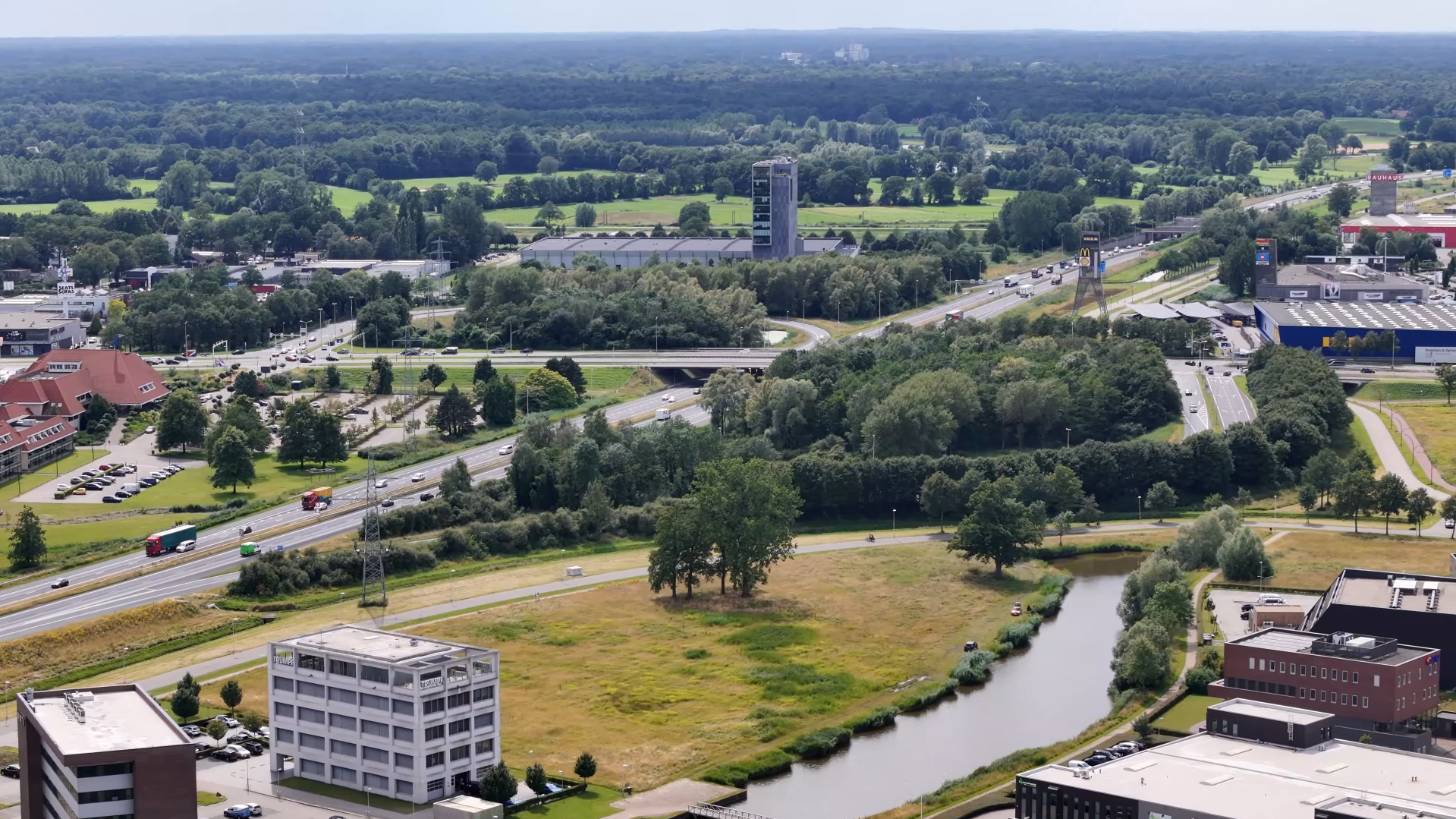
Program for Futureproof Industrial Parks in Twente
A strong Twente business sector is the engine of the regional economy. Companies form the foundation of the region's current and future earning capacity, providing income and job security for residents. It is crucial that the business sector in Twente continues to develop. The programme for sustainable business locations focuses on making energy supply on business sites more sustainable, a necessary step to address the increasing congestion on the power grid.
TBBT Twente
A strong business community in Twente is the driving force behind the regional economy. Businesses form the foundation of the region’s current and future earning capacity and provide income and job security for residents. It is crucial that the business community in Twente continues to develop. Within the Regional Deal program Future-Proof Business Parks Twente (TBBT), efforts are underway to make energy supply at business locations more sustainable. This is necessary to address the growing congestion on the power grid.
Are you also concerned about your company’s energy consumption in Twente, or are you facing grid congestion, and would you like to learn more about what you can do together with your neighbors? Contact the TBBT Twente program for more information and to register your project for participation.
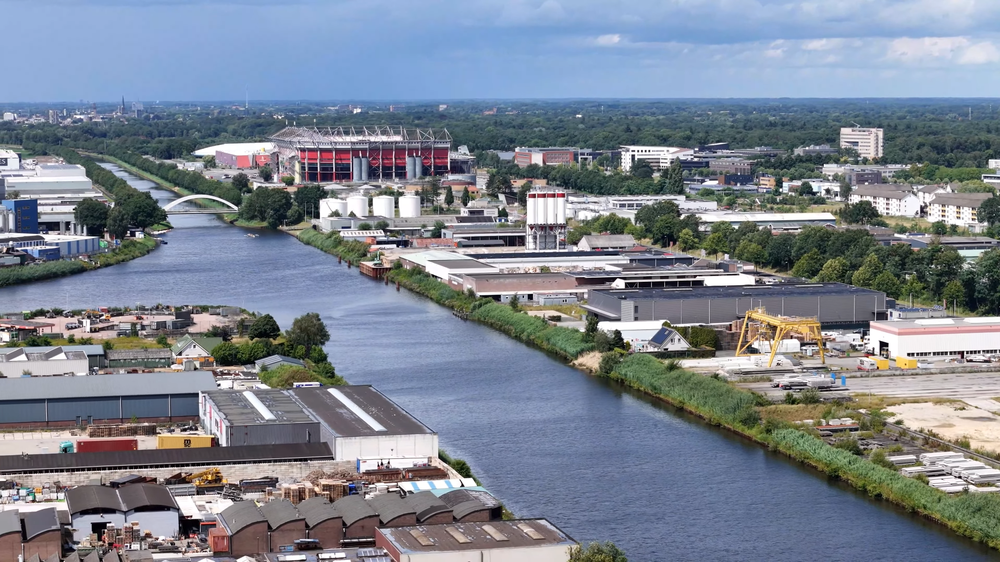
Working together for more energy
The power grid is at capacity, a condition known as grid congestion. We are consuming more and more electricity and also feeding more and more back into the grid. This growth is happening so rapidly that the power grid can no longer keep up. This affects us all, and business locations and industrial parks are also dealing with it. Whereas companies could ramp up their production “unhindered” just a few years ago, they are now increasingly receiving warnings from the grid operator that they are exceeding their contracted transmission capacity, and there is no capacity on the grid to use more energy.
Many companies can therefore no longer increase their electricity consumption individually. But together, there are still many possibilities. For example, companies can generate energy together and exchange it with one another. “We see that companies are discussing this with one another,” explains Christian Lorist, project manager at VNO-NCW Midden. “They’re reaching out to each other to develop a plan for how they can share energy and settle accounts among themselves. And how they can manage the energy using software, taking the weather into account.”
Research and physical investments at business sites
The TBBT Twente program will support collective projects from 2024 through 2027. To participate in the program, projects must focus on:
- Making the energy supply at business sites more sustainable;
- Addressing grid congestion through innovative solutions such as Smart Energy Hubs;
- Stimulating collaboration to promote organizational coordination, for exploring collective opportunities to reduce grid congestion.
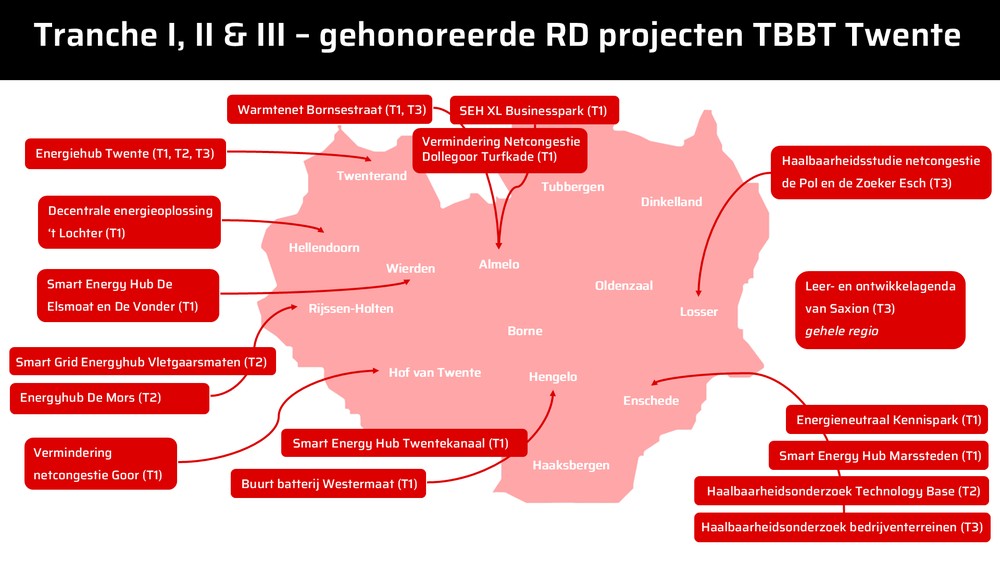
In 2024, the program launched its first application round, Tranche I. At that time, 11 projects were initiated. In Tranche II, in early 2025, 5 additional projects were added. The 5 applications for Tranche III will be evaluated by the Twente Board around December 11, 2025.
These projects range from feasibility studies to implementation projects, are initiated by entrepreneurs, municipalities, and knowledge institutions, and also differ in content.
Project aanmelden in 2026
“Every business location is different and requires different measures. This might involve, for example, installing a neighborhood battery or establishing a district heating and cooling network. The funding from the Twente Regional Deal is providing a massive boost. “Companies are investing on their own as well, but these solutions are expensive, and there is often an unprofitable top,” says Arnout Terpstra, project manager for area and project development at the City of Enschede.
Projects can still apply for the TBBT Twente program in 2026. There are still opportunities for more collective implementation projects and studies. Tranche IV and Tranche V are likely to follow in 2026.
Please note the following dates for Tranche IV:
- Information session on Tranche IV: Wednesday, January 28, 2026
- Online information session on Tranche IV: Wednesday, March 4, 2026
- Deadline for submitting draft applications: Friday, April 3, 2026
- Deadline for submitting final applications: Friday, May 1, 2026
- Twente Board decision on projects: Thursday, June 25, 2026
The TBBT Twente project team will be happy to provide you with information about the guidelines and required documents for your project application. Please contact us at tbbt@ondernemendtwente.nl for more information about the submission process. Please note that you must submit a project plan, application form, and a statement of co-financing with your application. When assessing the suitability of the project, we will consider, among other things, whether the application meets the KRACHT criteria, whether the project is technically, legally, and financially feasible, and whether it aligns with the covenant.
Regional structure
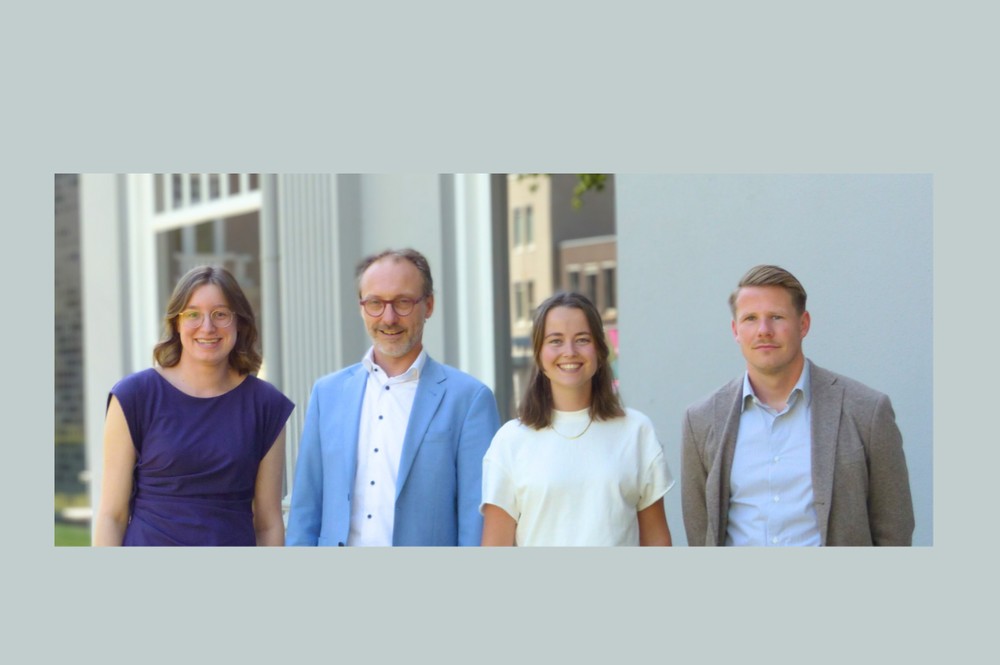
Establishing a regional support structure for businesses that want to take concrete steps toward making their energy supply more sustainable is also part of the program. The core team forms the heart of this regional structure. This team consists of Menno ten Heggeler, program coordinator representing the businesses; Arnout Terpstra, program coordinator representing the municipalities; Berber Schermerhorn, project support specialist; and Eline Eiling, communications advisor.
“We want to advance even more projects. We also want to help business locations in smaller municipalities become more sustainable,” explains Menno. He urges entrepreneurs with plans to make their energy supply more sustainable or to resolve grid congestion issues to contact the program team for assistance in applying for the Regio Deal subsidy. “However, this must involve multiple owners and a collective facility. Local ownership is important.”
Many measures aimed at reducing grid congestion for businesses also require coordination and collaboration with the grid operator. The core team therefore facilitates contact between project participants and the grid operator(s), and shares the lessons learned from the projects with the grid operator(s) to move forward together.
Sharing knowledge
“This core team will help entrepreneurs across all projects navigate the challenges they’re bound to face,” Christian explains. “But companies also learn from one another. Knowledge exchange is another goal of the program. We want to build a community where business locations help other locations. We want to establish a structure that will continue to exist even after three years and that will actually make the energy transition possible. In doing so, we’re also involving the education sector, which brings new insights to research questions that arise.”
Contact us for more information.
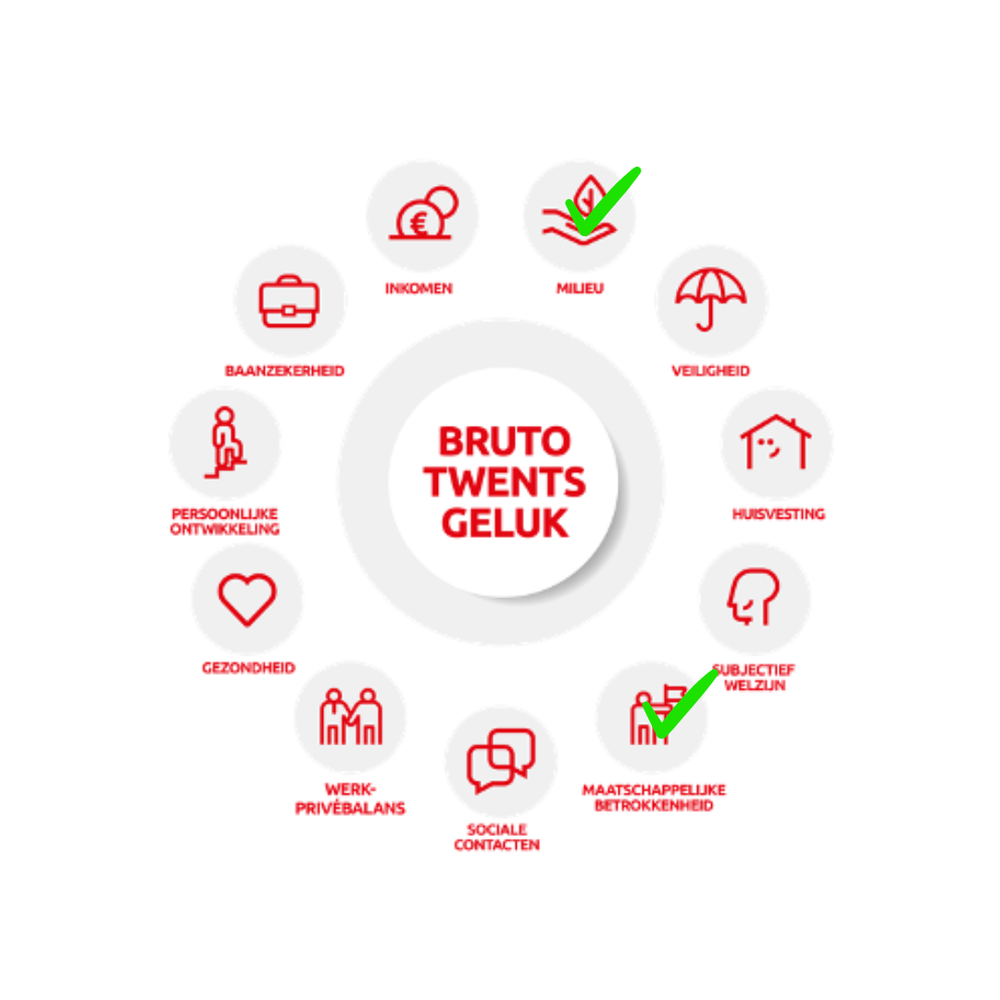
Gross Twents Happiness
Which indicators does the TBBT project contribute to?
✓ Community engagement
✓ Environment