Twente takes regional competitiveness to Brussels
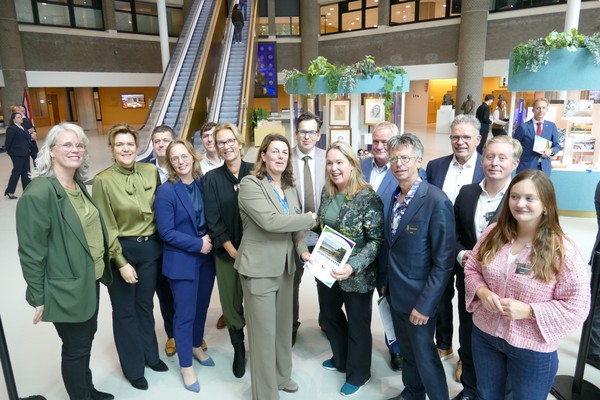
How can Europe remain competitive in a rapidly changing world? That question was the focus of this week’s European Week of Regions and Cities (EWRC) in Brussels. With a broad delegation comprising local government officials, entrepreneurs, research institutions and regional partners, Twente shared its perspective on the role of strong regions in Europe’s competitiveness.
Date of Publication: 16 October 2026
Read time +/- 5.2 minutes
Strong regions require joint decisions
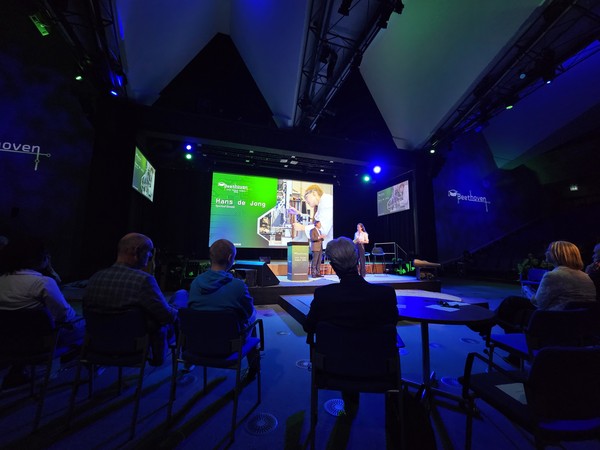
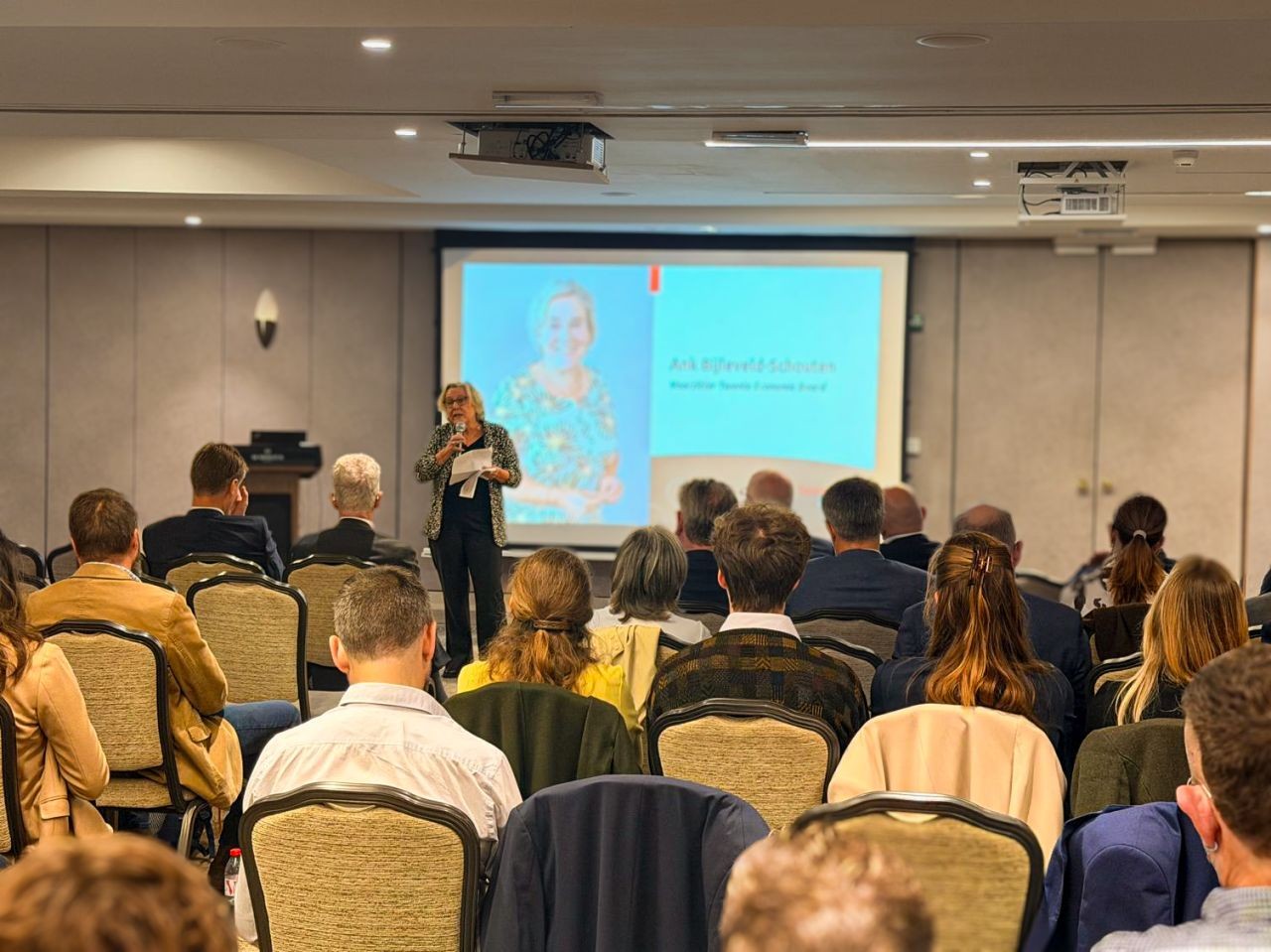
During the EWRC’s launch event in Twente, Twente Board Chair Ank Bijleveld-Schouten emphasised that competitiveness does not arise solely from European programmes or national policy documents, but rather within regions – where businesses invest, people are trained, and new technology is developed, tested and applied.
“Twente boasts innovative businesses, knowledge institutions, technical talent and manufacturing strength. Our region’s clout stems from bringing these qualities together.”
According to Bijleveld, this requires cooperation between government, entrepreneurs and the education sector, but also focus and joint decision-making. “We must choose in order to be chosen,” said Bijleveld. That is why Twente has consciously chosen the priority areas of ChipTech, MedTech, Defence and Talent. In doing so, the region aligns itself with national and European priorities whilst working on solutions to issues relating to health, safety, digitalisation and talent development.
Mendeltje van Keulen, a lecturer at The Hague University of Applied Sciences and author of *Retourtje Brussel*, also reflected on the position of regions in Europe. Her message was clear: anyone wishing to influence European policy must get involved at an early stage, build relationships and actively collaborate with European partners.
From innovation to production and application
On Monday evening, Han ten Broeke, Chief of Staff to European Commissioner Wopke Hoekstra, spoke at the Twente regional dinner about the challenge facing Europe: investing in renewable energy, and not only innovating in new technology but also producing and scaling up. It is precisely this step from innovation to application and production that is becoming increasingly decisive for European competitiveness.
For Twente, this is a familiar challenge. The region combines a strong manufacturing sector with innovative companies and a unique position in terms of knowledge. With the University of Twente as a key knowledge partner in areas including artificial intelligence, cyber security, data, sensor technology and quantum technology, Twente distinguishes itself precisely through the link between digital knowledge and industrial strength.
Stronger Regions, Stronger Europe
On Tuesday, Twente Board and the municipalities of Twente organised the ‘Stronger Regions, Stronger Europe’ workshop. The central question was how strong regions can contribute to Europe’s competitiveness. During the workshop, Jeffrey Hinnen demonstrated how this combination works in practice. Using specific innovations from Twente as examples, he illustrated how knowledge development, entrepreneurship and application come together to create new products, economic activity and social impact.
The business community was also strongly represented in Brussels. Job van Harmelen of Thales Netherlands discussed the contribution Twente can make to European ambitions in the field of security and resilience. “The Netherlands, Twente and our industry are excellently positioned to contribute to Europe’s ambitions in the field of security and resilience. Particularly in the field of integrated air and missile defence, we possess the knowledge, technology and companies that can make a significant contribution to Europe.”
Collaborating on European challenges
It was striking that the Twente delegation did not consist solely of administrators. Entrepreneurs and knowledge partners were also actively involved. It was precisely this broad representation of government, the business community and knowledge institutions that other regions cited as a strength of the Twente approach.
As a border region, Twente also collaborates across national borders on a daily basis. Through partnerships such as TECH.LAND, knowledge, businesses and talent in Twente and Germany are linked together. In doing so, the region contributes not only to its own economic development, but also to a stronger European innovation and industrial ecosystem.
In addition to the substantive sessions, the delegation spoke with European partners about innovation, investment and future cooperation. The discussions in Brussels confirmed the importance of strong regional cooperation and an active role in Europe. As Chair Ank Bijleveld-Schouten summarised: “Strong regions do not merely make for a stronger Europe. Strong and connected regions make Europe indispensable.”
Marjolein Kooi
Share article on: